


Cervical osteochondrosis is one of many diseases that affects a large number of people around the world.Most often, this disease is caused by a sedentary lifestyle.The manifestations of this type of osteochondrosis are concentrated in the neck and are a fairly common pathology.Cervical osteochondrosis is a serious disease, since its symptoms are not always clear and, given its location, this pathology may lead to negative processes in other areas.
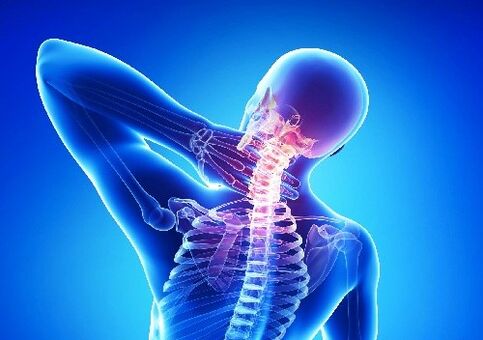
To understand how to treat this deviation, and what needs to be done first, you need to start with the basics of why cervical osteochondrosis occurs.As mentioned earlier, this disease occurs due to a sedentary lifestyle.Speaking of this type of osteochondrosis, I would like to point out right away that it differs from general osteochondrosis in many ways.The fact is that the cervical area is a dangerous and critical area of the spine.
Symptoms of cervical osteochondrosis
In order to fully determine the severity of the disease and develop the correct treatment plan, all symptoms must first be recognized.In this case, the symptoms of cervical osteochondrosis have three complex groups.
Group 1.This set of symptoms is more related to the nervous system component.In fact, when the cervical spine flexes, pressure may be placed on the discs and thus the nerve roots.Nerve plexuses can also be stressed.Therefore, the list of symptoms includes neck pain.Acute stinging and cervical radiculitis may also occur.If the condition is more complex, chest joint and muscle pain may occur.
Group 2.In this group, symptoms develop due to the impact of osteochondrosis on the spinal cord.It is worth noting that there are two types of influences on the occurrence of symptoms at this stage.The first effect is called compression caused by the nucleus pulposus being detached from the disc, and the second effect occurs when the spinal cord is injured by a hard growth.
In this condition, weakness of the lower and upper limbs is often observed.There may also be a slight, almost imperceptible twitching in the hand that is not painful.
The third group.This is the most complex form and can produce severe symptoms.Here we have discussed the impact of pathology on brain processes.In this case, the brain has begun to suffer from insufficient blood supply to the brain.Such deviations can cause hypothalamic syndromes, which can lead to neurotic disorders.There is also the possibility of a drop attack.In this case, a person may faint for no apparent reason and then their legs become weak.There may be vestibular syndrome, which can cause dizziness, nausea, and vomiting.Throat syndrome occurs.
treat
Now that we know all the causes and all the symptoms of this pathology, we can think about ways to treat it.However, it is worth explaining immediately that complete recovery is impossible, only to stop the process and slow down the deterioration.Whether hospitalization is required depends on the patient's condition.
If we talk about medications, then for cervical osteochondrosis, a variety of analgesics are used and in some cases even novocaine muscle block is used.But do not forget to take vitamins during this period, they are necessary.Physical therapy also has a positive impact on a patient's condition.In particularly difficult situations, it may be necessary to wear a Shants collar.
But first, it is still worth contacting a doctor who specializes in the treatment of this pathology, that is, a neurologist.Based on the diagnosis, he can develop an effective treatment method.